The Stinger Is a Leash: Marvel Turned the Post-Credits Scene Into a Subscription
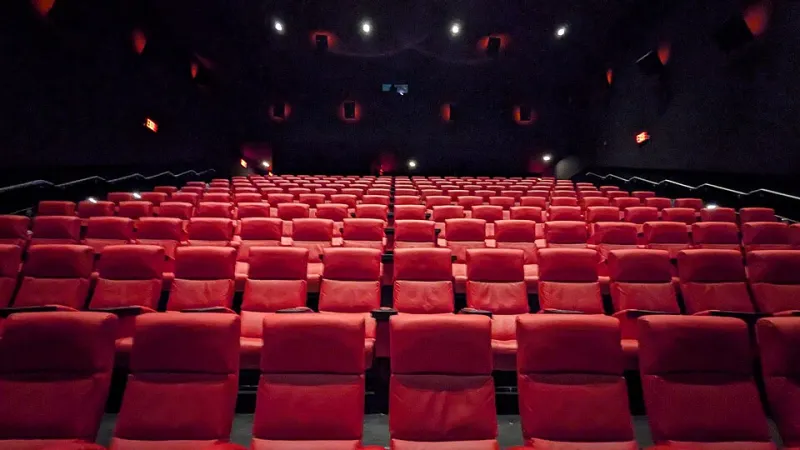
Photo: Eden, Janine and Jim from New York City, CC BY 2.0, via Wikimedia Commons
You know the ritual. The screen goes dark. The lights haven't come up. Half the theater stands, stretches, and starts edging toward the aisle while the other half — the initiates — stay planted, phones out, watching names scroll past for ten minutes because somebody, somewhere, has promised them forty more seconds of movie.
That's not a bonus anymore. That's a subscription model with a soundtrack.
It Started as a Wink
Let's be sentimental for one paragraph, because the early stingers earned it. A certain 2008 superhero movie ended with a man in an eyepatch stepping out of the shadows to talk about a bigger world. It was cheeky. It was a gift to the diehards. It cost nothing and it asked for nothing.
The key word is asked. The stinger used to be a host who leaves a mint on the pillow. Now it's a host who leaves a bill.
When the Tease Became a Table of Contents
Somewhere along the way, the post-credits scene stopped being about the film you just watched and became about the slate. It's less a bonus than a corporate roadmap delivered in a smoky voice: here is the character you'll be introduced to in eighteen months, here's a name-drop for a series on a streaming service you're already paying for, here's a prop that has been legally cleared for four future appearances.
Notice what's missing from that list. Anything to do with the movie you're sitting in. Anything resembling a conclusion.
The Homework Economy
Theaters in 2026 have a new jobs program: ushers telling people there are two scenes, one mid-credits and one after, and yes, the second one matters more. Meanwhile, the search bar on your phone knows exactly what you're going to type before you buy the ticket. Is there a post credits scene. How many. Should I stay.
You are now researching a film's administrative structure before you've seen the film. That is not how anybody consumes storytelling. That's how you consume a syllabus.
And it's working beautifully, because homework is sticky. A movie that ends cleanly gives you a feeling and sends you home. A movie that ends with an assignment keeps you in the ecosystem: reading explainers, watching breakdown videos, arguing about what a silhouette means, and — crucially — staying subscribed so you're caught up when the next chunk drops.
A Story That Refuses to End Isn't a Story
Here's the thing about endings. They are not the boring part. Endings are where meaning happens. A character makes a choice, the choice costs something, the cost lands, and you walk out into the parking lot changed by it. That is the entire magic trick, and it requires a period at the end of the sentence.
A stinger is a comma. And a movie that ends in a comma has quietly told you that it doesn't trust its own conclusion to hold you. It doesn't believe the two hours were enough. So it dangles a shiny object past the credits like a parent jingling keys so the toddler will keep walking.
Worse, it teaches the audience the same lesson in reverse. We start valuing the tease over the text. We leave a genuinely great self-contained film feeling vaguely unsatisfied because it didn't leave a breadcrumb. We start reviewing movies by their setup instead of their story. We become, in other words, exactly the kind of audience a franchise wants: permanently hungry, never full.
Theaters Became Lobbies
The physical experience has degraded to match. The credits used to be a moment — the lights come up, the room exhales, strangers make eye contact about what they just saw. Now the credits are a waiting room, lit by a hundred phone screens, full of people who are technically still in the movie but emotionally already shopping for the next one.
And the ones who leave are treated like rubes. Missed the stinger? That's on you. Never mind that you paid for a story. You should have known it came with a shuttle bus to the sequel.
What a Real Gift Looks Like
I want to be clear that the stinger isn't inherently evil. A good one is a joke, a grace note, a small thank-you. The difference is whether it serves the film or replaces the film as the point. If the thing after the credits is more discussed than the thing before them, the tail is wagging the dog and the dog has been cleared for three more appearances.
So here's the radical proposal. Make movies that end. Make them end so hard that people sit in their seats for a second because they need a minute, not because they're waiting for a receipt. Let the credits be credits again — a slow fade, a good song, a room full of people who all just learned something.
And when the lights come up, let us go home. That's not a threat to the franchise. It's the whole reason any of us started buying tickets.