Neon Doesn't Equal Menacing: How Superhero Films Are Cosplaying Danger With 80s Aesthetics
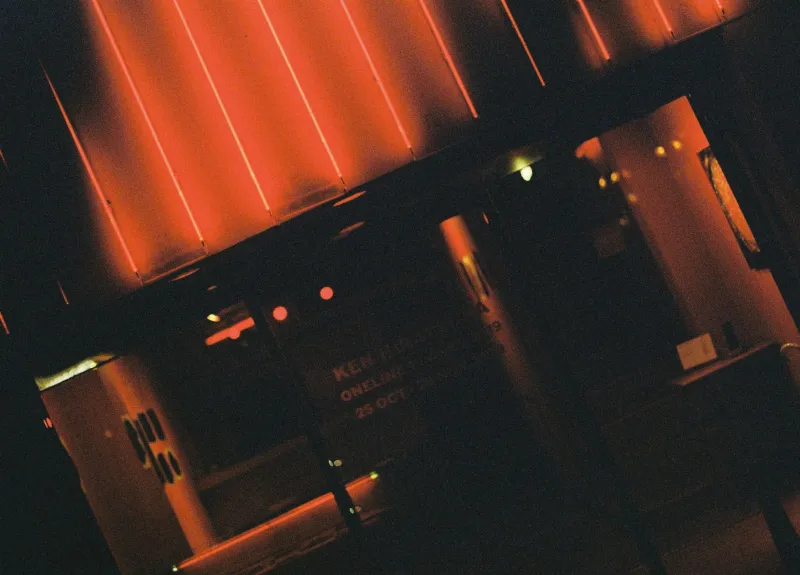
Somewhere between the third synth sting and the second slow-motion strut through a neon-drenched corridor, you might find yourself thinking: this villain is absolutely immaculate and I am not scared of them at all. That feeling? That's the 2020s superhero blockbuster experience in a nutshell — gorgeous, retro-flavored, and about as threatening as a lo-fi playlist curated for studying.
Hollywood has officially entered what film critics probably should be calling the Synth-Pop Villain Era, and it is producing some of the most aesthetically coherent antagonists the genre has ever seen. It's also producing some of the most ideologically hollow ones. Because when your villain's entire personality is a Stranger Things mood board stapled to a Kavinsky deep cut, you haven't built a nemesis. You've built a vibe.
The Aesthetic Is Doing All the Heavy Lifting
Let's be honest about what's actually happening here. Studios discovered — probably after some very expensive focus group research — that 80s nostalgia triggers a specific emotional warmth in their core demographic. Millennials who grew up renting VHS tapes and Gen Xers who lived through the actual decade both respond to that era's visual language like Pavlov's dog responds to a bell. Slap some neon pink on a villain's lair, pump some analog synths into the score, give the bad guy a Members Only jacket or a power suit with linebacker shoulders, and suddenly the audience feels something.
The problem is that feeling is nostalgia, not dread.
There's a crucial difference between a villain who unsettles you and a villain who looks cool while doing things that are nominally bad. Recent superhero media has been absolutely crushing the second category. The visual design teams deserve every award on the table. The writers' rooms, however, deserve a long conversation about what menace actually requires.
Real antagonists carry an ideology. They represent something that genuinely challenges the hero's worldview — and by extension, the audience's. When Magneto argued that mutant survival required mutant supremacy, that wasn't just a character quirk; it was a thesis statement rooted in the actual history of what happens to marginalized groups who play nice and wait for justice. When the Joker (in his better incarnations) dismantled Batman's rules, he was exposing the philosophical limits of the hero's moral framework. Those villains were arguing with you. They were making you uncomfortable in ways that lingered after the credits.
A villain who looks like he belongs on a synthwave compilation album and whose master plan amounts to "chaos, but make it retro" is not arguing with anyone. He's just accessorizing.
The Vaporwave-ification of Evil
The visual shorthand being deployed here is worth examining because it's genuinely clever on the surface. The 1980s, as a cultural touchstone, carry specific connotations: excess, ambition, moral ambiguity, the shadow of Reagan-era corruption dressed up in primary colors. There's real thematic potential in mining that decade for villainy. Gordon Gekko was an 80s villain. Patrick Bateman was an 80s villain. These were characters whose aesthetics expressed their ideology — the power suits weren't decoration, they were argument.
Modern superhero films are borrowing the wardrobe without writing the argument.
What you get instead is a kind of vaporwave-ification of evil — a hollowed-out, aesthetically pleasing shell that gestures at danger without committing to it. The neon palette says "this person operates outside normal moral boundaries." The synth score says "we are in a heightened, slightly surreal world where different rules apply." But then the actual screenplay says "this person wants to [insert generic world domination/revenge/chaos objective here]" and the whole construction collapses into familiarity.
It's evil as an album cover. It looks incredible on a poster. It doesn't survive the runtime.
Why Studios Keep Reaching for the Decade That Taste Forgot
The cynical read — which is usually the correct read when it comes to franchise filmmaking — is that 80s aesthetics function as risk management. They signal "this is different and edgy" without requiring the film to actually be different and edgy in any way that might alienate a portion of the audience. A villain with a genuinely confrontational worldview — one that implicates the systems the audience lives inside — is a villain who might make someone uncomfortable enough to leave a bad review. A villain with great hair and a killer soundtrack is just a villain everyone can enjoy hating without examining why.
The 80s nostalgia coating is, in this reading, a very sophisticated form of defanging. It creates the sensation of edge while carefully removing anything that might actually cut.
There's also a storytelling laziness embedded in the approach that's worth naming. Visual shorthand is a legitimate filmmaking tool — but it's a tool, not a replacement for character construction. When a filmmaker establishes a villain's menace through aesthetic cues borrowed from a culturally loaded decade rather than through the villain's actual actions, choices, and philosophy, they're outsourcing the characterization to the audience's memory. You're not scared of this villain. You're scared of the thing this villain's aesthetic reminded you of.
The Villains We Actually Deserved
Here's the uncomfortable question the Synth-Pop Villain Era keeps dodging: what would it look like to build a superhero antagonist who genuinely threatens the ideological foundations of the story? Not one who blows up buildings (boring, been done, nobody cares), but one whose argument the hero can't simply punch into submission?
Because that's what the best villains have always done. They've forced the protagonist — and by extension the audience — to sit with a question that doesn't have a clean answer. They've exposed the gap between the hero's stated values and the actual mechanics of how those values operate in the world.
A villain dressed in 80s drag and backed by a synth orchestra doesn't do that. He looks amazing doing nothing of substance, and then he loses in the third act, and then you buy the Funko Pop.
The superhero genre is capable of so much more than this. The comics it's drawing from spent decades building antagonists who were genuinely philosophically dangerous — characters whose worldviews were coherent enough to be seductive, whose challenges to the hero were substantive enough to leave marks. The source material is right there.
Instead, we're getting villains who look like they belong on a playlist called "Dark Academia Drive" and whose greatest act of menace is having impeccable taste in interior design.
The aesthetic is flawless. The threat is nonexistent. And somewhere out there, a focus group is giving it four stars.
Mutant Stand would like the record to show: we wanted the real thing. We got a very pretty screensaver.