Smooth Faces, Dead Eyes, and a $200 Million Budget: Hollywood's Digital Human Problem Is Getting Worse
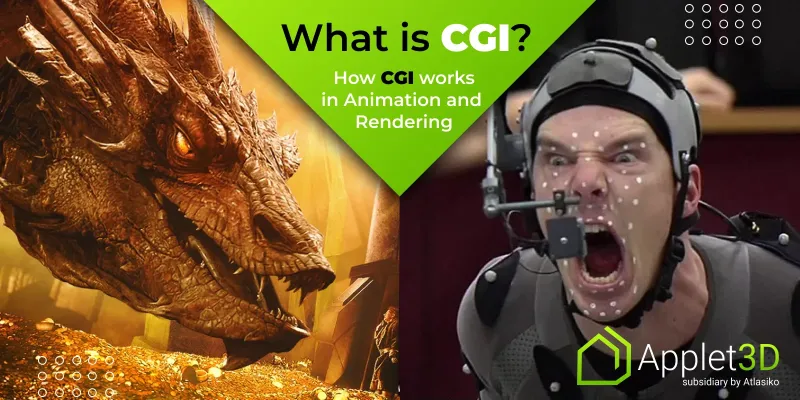
Photo: CGI digital face technology film production visual effects, via applet3d.com
Somewhere in a server farm the size of a football stadium, a render farm is working overtime to produce a version of a beloved actor's 1987 face. The pixels are technically correct. The skin texture has been mapped with forensic precision. The lighting matches the scene. And yet, the moment that face appears on screen, something in your lizard brain fires off a distress signal so primal it bypasses rational thought entirely.
You don't know why you're uncomfortable. You just are.
Welcome to the uncanny valley — Hollywood's most expensive and least acknowledged creative failure.
The Technology That Keeps Promising to Deliver
De-aging technology has been a fixture of blockbuster filmmaking for the better part of a decade now, and the pitch never changes: this time, it'll be seamless. This time, audiences won't notice. This time, the digital facelift will be so convincing that nobody will sit in their seat quietly calculating how much money was wasted making Samuel L. Jackson look like he did in 1995.
Spoiler: they always notice.
The issue isn't really about technical resolution or processing power. The problem is biological. Human beings are wired, at a neurological level, to detect faces. We've been reading each other's expressions for survival for hundreds of thousands of years. We are, quite literally, expert-level face analysts from birth. So when something is almost right but not quite — when the jaw moves a half-beat behind the dialogue, when the eyes don't catch light the way eyes catch light, when the smile doesn't reach the periorbital muscles — our brains don't shrug it off. They scream.
No amount of render time fixes that. It's not a hardware problem. It's a humanity problem.
The Graveyard of Good Intentions
Let's talk about the digital resurrection game, because that's where the uncanny valley stops being an inconvenience and starts being genuinely uncomfortable territory.
When Rogue One deployed a digital Peter Cushing for an extended speaking role, the discourse was immediate and divided — some found it a touching tribute, others found it deeply unsettling, and a quiet but persistent contingent found the entire enterprise ethically murky in ways that went beyond aesthetics. Cushing died in 1994. He did not consent to starring in a 2016 Disney production. His estate did, which is a distinction worth sitting with.
Marvel's de-aging pipeline has become practically routine at this point — Kurt Russell in Guardians Vol. 2, Michael Douglas across the Ant-Man franchise, the entire opening act of Captain Marvel. Each one technically impressive. Each one slightly off in ways that accumulate over a two-hour runtime into a low-grade sense of wrongness you can't quite shake over your post-credits popcorn.
The irony is savage: the more photorealistic the technology becomes, the more acutely audiences perceive its failures. Stylized animation sidesteps the problem entirely because it never pretends to be real. It's the pretending that gets you. It's the gap between the claim and the delivery.
Meanwhile, in a Warehouse in New Mexico
While the major studios are burning through VFX budgets trying to reconstruct human faces from archival footage, something interesting is happening at the margins.
Independent productions — and even some mid-budget studio films that slipped through the corporate approval process with their souls intact — are rediscovering what practical effects do that digital work fundamentally cannot: they exist. A prosthetic is physically present in the scene. An actor interacting with a puppet is reacting to something real. The camera captures genuine spatial relationships, genuine light interactions, genuine human responses.
Everything Everywhere All at Once didn't have a de-aging sequence. It had Michelle Yeoh doing physically demanding, emotionally raw work and a production design team that understood that weirdness lands harder than polish. The result was one of the most visually inventive films of the last decade, made for a fraction of what Marvel spends on a single act of a Phase Whatever entry.
The Terrifier franchise — gory, gleefully unhinged, and built almost entirely on practical makeup effects — has developed a cult following that the algorithmically optimized content machine can't manufacture no matter how many focus groups it runs. Art the Clown is disturbing because he's there, in the frame, with the actor, on the set. The horror is physical. It lands.
The AI Escalation Nobody Voted For
If de-aging and digital resurrection were the opening act, AI-assisted character creation is the headliner nobody bought tickets to see.
The industry conversation around AI face generation, AI voice cloning, and AI-assisted performance synthesis has accelerated at a pace that's left audiences, critics, and — crucially — the actors whose faces and voices are being fed into training models, gasping to keep up. The WGA and SAG-AFTRA strikes of 2023 put this conflict in the national spotlight in ways that made it impossible to dismiss as niche labor grievance. This is a fundamental question about who owns a human likeness and what consent means in the age of generative models.
And underneath all the labor politics and IP law debates, there's still that original problem: audiences don't want it. Not because they're Luddites or because they're resistant to technological change, but because the output is worse. It's less compelling. It fails to move them in the way that actual human performance moves them, and they can feel that failure even when they can't articulate why.
The Argument the Studios Won't Make
Here's the thing nobody in a greenlight meeting wants to say out loud: the obsession with photorealistic digital humans isn't primarily a creative decision. It's a control decision.
A digital actor doesn't age between films. Doesn't get arrested. Doesn't demand a bigger trailer or a producing credit or the right to read the script before signing. Doesn't die at an inconvenient moment in a franchise's production schedule. The appeal of the technology isn't really about serving the story — it's about removing the unpredictable, inconvenient, expensive variable of actual human beings from the equation.
The audience can feel that, too. Maybe not consciously. But somewhere in the same neural architecture that detects the uncanny valley, there's a register for authenticity — for whether a piece of art was made by humans who cared, or assembled by a pipeline optimized for risk mitigation.
The uncanny valley isn't just about faces. It's about the whole enterprise. And right now, the blockbuster industrial complex is deep in the valley, spending hundreds of millions of dollars to produce work that feels less human than a student film shot on a borrowed camera over a long weekend.
The technology will keep improving. The faces will get smoother. The render times will get shorter. And if the studios don't course-correct, the audiences will keep sitting in the dark with that low-grade wrongness humming in their nervous systems, wondering why they don't feel anything.
The uncanny valley called. It said the problem was never the resolution.