Crack the Case: Your Slabbed Comic Is a Very Expensive Coaster

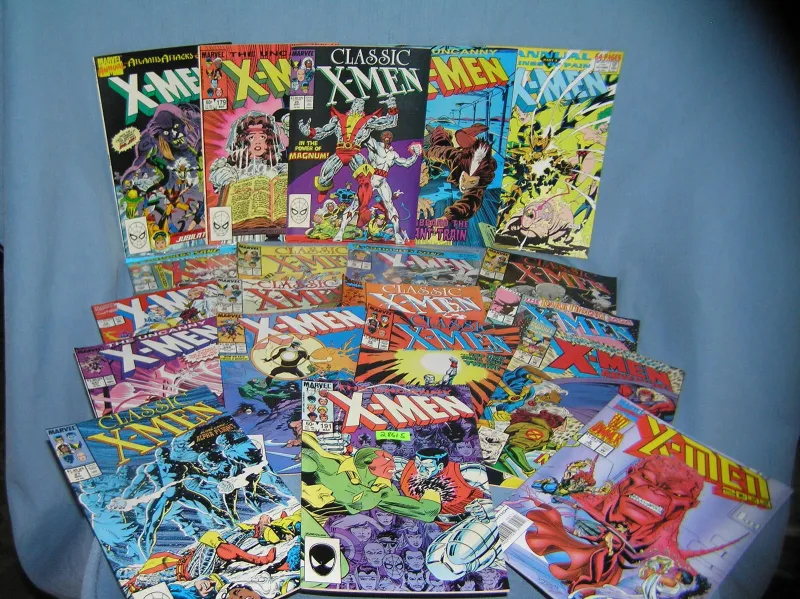
Photo: Chuck Schultz from Anniston, AL, USA, CC BY-SA 2.0, via Wikimedia Commons
Walk any dealer's table at any con in 2026 and you'll see the same architecture: a wall of plastic rectangles, each one a comic that has been weighed, measured, pressed, cleaned, and then permanently sealed away from human contact like it saw something it shouldn't have.
A kid stopped at one of these tables last month. He wanted to know what happens in the issue behind the plastic. The dealer shrugged and told him he could look it up on the wiki. That's the whole hobby in one exchange. The answer to what happens in the story was a URL.
How a Plastic Brick Became a Personality Trait
Let's be fair to the origin story. Third-party grading arrived because the secondary market was a swamp of trimmed edges, color touch-ups, and restored spines sold as pristine. A neutral referee made sense. A number made sense. Certification made sense.
What didn't make sense was everything that came after: memorizing label colors with the same devotion we once gave to continuity, treating a census report like a box score, and building entire personalities around the fact that our copy scored a tenth of a point higher than someone else's. The slab stopped being a tool for authentication and became an object of devotion. You don't display a comic anymore. You display a verdict.
The Number Ate the Story
The mechanism is brutally simple. Grade goes up, price goes up. A 9.8 commands multiples of a 9.6, which itself embarrasses a 9.4, and somewhere down at the bottom of the well sits a perfectly lovely 8.5 that has been made to feel bad about itself. So people buy raw books, submit them, wait months, pray to the pressing gods, and flip. The comic is never the product. The comic is the ore.
And once the number is the product, everything that made comics a mass medium falls away. Nobody is discussing the pacing of a page turn because nobody is turning pages. The letters page, the backup feature, the ads for Hostess Fruit Pies — all of it becomes irrelevant texture inside a sealed cube, described in an auction listing by a seller who has almost certainly never read it either.
The Math Stopped Mathing
Here's the part the speculator class didn't price in: grading fees, shipping both ways, insurance, turnaround times, and the ongoing cost of storing thousands of hard plastic rectangles that weigh more than you think. The modern spec market spent years assuming infinite appreciation. In 2026, a lot of those slabs are sitting in climate-controlled rooms, unsold, while the sellers quietly discover that the premium compresses the moment the buyer pool shrinks.
Watch the dealers. Some of them are cracking slabs to sell raw, because the plastic stopped adding value and started adding friction. That's not a crash headline. It's something more embarrassing: a quiet admission that the case was never doing the work.
In the Meantime, Reading Got Priced Out
The real casualty isn't the investor. It's the on-ramp. Key issues that used to be aspirational are now unaffordable, back-issue bins get combed clean by people who don't read them, and a twelve-year-old with ten bucks has fewer doors to walk through than any kid in the last forty years. We built a hobby with a velvet rope and then wondered why the room felt empty.
Subscription apps and library access are great. But the physical object was the invitation. We laminated it.
What Slabs Actually Protect
Ask the honest question: what does encapsulation preserve?
It preserves resale value. That's it. It does not preserve the experience of the book. You can't open it. You can't smell the newsprint. You can't check the panel where the artist clearly got bored and hid a joke in the background. You can't hand it to a friend. You can't lend it to a cousin who's never read an X-Men comic and will now never have the chance because it's entombed in a numbered brick with a nine-point-eight engraved on the lid like a headstone.
A comic sealed in plastic is a comic that has been converted into an asset and removed from the culture.
Cracking It Is the Rebellion
So here's the manifesto, and it's not complicated. Buy the slab. Take it home. Cut the case. Read the book. Put it in a Mylar with a board, or don't, honestly, just use a bag like a normal person. Yes, the number evaporates. Yes, the resale value dips. You are trading a tenth of a point for an afternoon of actually experiencing the thing you spent money on, which is a trade that would baffle a hedge fund and delight a human being.
Every cracked slab is a small vote for the idea that comics are culture and not inventory. Every cracked slab is a middle finger to the idea that the only meaningful measurement of art is a spreadsheet column.
Grade Something Else
If we must have numbers, let's grade the things that matter. Grade the dialogue. Grade whether the colorist understood the assignment. Grade whether a kid will still be thinking about page nineteen in twenty years. Grade whether the book has a point of view, or whether it's just a beautiful, safe, well-lit nothing engineered to move units.
Or skip the grading entirely and start lending. Pass the book to somebody. Let it get creased. Let it get read so many times the spine gives up. A comic with a cracked spine and a dog-eared corner is a comic that did its job.
The medium doesn't survive in a vault. It survives with claw marks on it. Put the case down and pick up the book.