You Can't sand Off the Scars: The X-Men Allegory Only Works When It Hurts
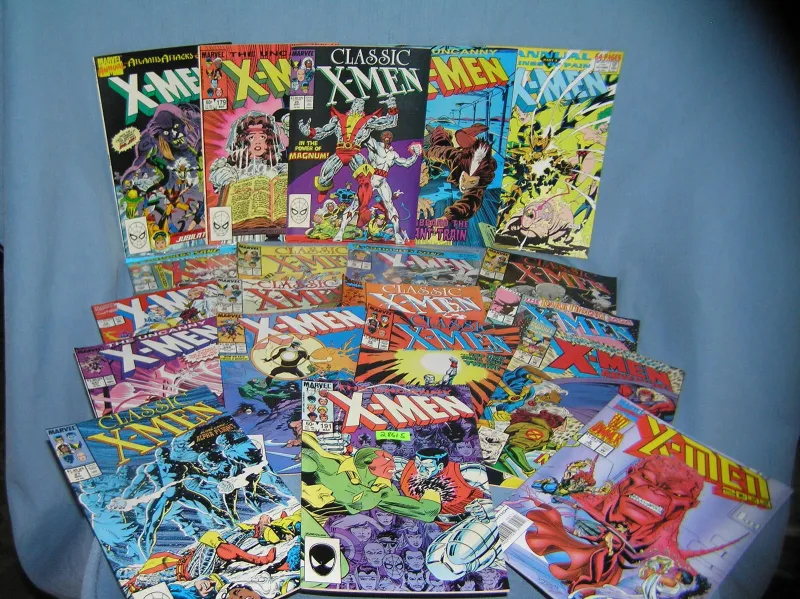
Photo: vintage x-men comic books stack close up, via p1.liveauctioneers.com
There's a scene that plays out in practically every X-Men movie, and you can set your watch by it: a young mutant discovers their power, and the film scores it like a prom proposal. Slow motion. Smile. Look what I can do. And every time, I feel the same small, sinking disappointment — because the whole engine of the X-Men, the thing that's kept the book alive for over sixty years, is that the mutation is not a superpower. It's a diagnosis.
The Page Understands What the Screen Keeps Flinching From
In the comics, being a mutant means your own body betrays you in public. It means your parents looking at you like a stranger. It means a government registry, a cure debate,Sentinels built in your image, friends who won't return your calls once the news breaks. Chris Claremont understood this in his bones — the man wrote mutant identity as an experience of ambient dread, not empowerment. When Kitty Pride's parents panic, when Bobby Drake can't come out (in every sense) to his folks, when Scott Summers' optic blasts make him a walking liability — the allegory breathes because the pain is specific.
The films, with a few noble exceptions, keep converting that dread into spectacle. Mutation becomes a branding asset. Magneto becomes a theme-park villain. The register-the-mutants plotline gets two scenes and a speech, then the third act blows it up in favor of a beam in the sky.
The Runs That Refused to Flinch
Go read the good stuff and the difference is stark. Claremont's "God Loves, Man Kills" is still the most honest X-Men story ever put to page precisely because the villain is a preacher and the weapon is a television camera. Grant Morrison's New X-Men turned the mutant birth-rate collapse into a horror story about extinction panic. Jonathan Hickman's Krakoan era — love it or hate it — asked the genuinely radical question: what if the persecuted minority just left and built their own country? That's not a superhero plot. That's a political thought experiment with claws.
And the recent X-Men '97 animated revival proved you can put this on screen — the episode dealing with mutant hate crimes hit harder than most live-action films in the franchise, on a cartoon budget, on a family network.
So it's not impossible. It's just that someone keeps choosing not to.
What an Actually Brave Adaptation Would Look Like
If Marvel Studios wants to adapt the X-Men instead of franchising the trademark, here's the uncomfortable checklist. Make the mutation gross, inconvenient, and sometimes terrifying before it's cool. Let the metaphor be messy — let a mutant character be wrong about something, let the mutant community have its own internal arguments, its own grifters, its own respectability politics. The comics have always been brave enough to depict Xavier as a manipulator and Magneto as a survivor with a body count; the films keep sanding both into tidy archetypes.
And for the love of Stan, stop treating the cure storyline as a spoiler. It's the beating heart of the allegory: the terror that the world would prefer you fixed to present. A studio that markets a mutant movie like a theme-park ride has already answered the question of whether they understood the material.
Mutant rights are human rights — on the page, that sentence costs something. On screen, it's been a tagline. The next adaptation gets to decide which one it wants to be. Claws out, please. We've had enough of the sander.