Nothing Means Anything Because Somewhere It Went Differently: The Multiverse Killed Narrative Stakes
The multiverse was supposed to be a storytelling superpower. Instead, Hollywood turned it into a narrative insurance policy — a way to kill characters without killing them, make choices without consequences, and build drama out of a foundation specifically designed to make drama impossible.
Let's talk about the moment blockbuster cinema decided that stakes were optional.
The Permission Structure
Here's what the multiverse actually is, when you strip away the quantum physics window dressing and the impressive visual effects: it's a guarantee that nothing you just watched is final. Every death has an alternate version where the character survived. Every sacrifice can be undone. Every hard choice exists in a universe where the other choice was also made. The multiverse is, structurally, a narrative undo button installed at the foundation of the story.
This is not a new observation, but it bears repeating because the industry keeps expanding the concept as if nobody has noticed what it does to storytelling. When Marvel introduced the multiverse as a central franchise mechanism — first in Loki, then in Doctor Strange in the Multiverse of Madness, then in Spider-Man: No Way Home — they were also introducing a quiet guarantee to their audience: nothing we show you is permanent, and we will never be held to consequences we find inconvenient.
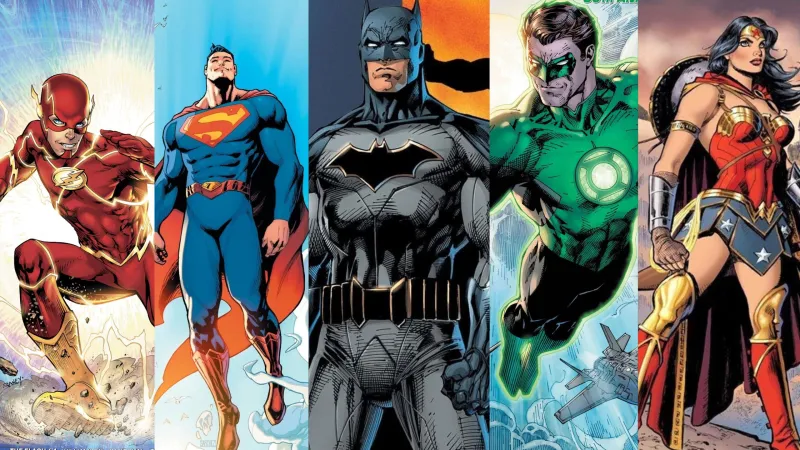
DC followed suit with the speed of someone who had been waiting for permission. The Flash's Flashpoint storyline, the Crisis on Infinite Earths crossover, the entire architecture of the DC Extended Universe's collapse and relaunch — all of it predicated on the same foundational escape hatch. Bad decisions at the studio level become narrative features. Characters you killed off come back wearing different shoes.
How We Got Addicted to the Infinite
The multiverse concept has legitimate storytelling power. Into the Spider-Verse used it to explore what a character means across versions of themselves — it was about identity, legacy, and the weight of a symbol. The comic book source material has been doing interesting things with parallel universes for decades. Jonathan Hickman's House of X and the Krakoa era used alternate timelines and resurrection protocols to ask genuinely difficult questions about what death means in a world where it can be reversed.
But there's a difference between using the multiverse as a lens and using it as a loophole. The former asks questions. The latter answers inconvenient ones before they can be asked.
Marvel's current multiverse obsession is the latter. It exists primarily to accomplish three studio goals: bring back popular actors without narrative justification, avoid the permanent consequences of earlier storytelling decisions, and create the appearance of high stakes while guaranteeing that nothing of actual value is on the table.
The Tobey Maguire Problem
Let's be specific, because No Way Home is the clearest articulation of everything wrong with how Hollywood is using the multiverse concept. The film is genuinely enjoyable. It is also, upon reflection, a masterclass in having your cake, eating it, and then pulling a second cake out of a dimensional portal.
Tobey Maguire and Andrew Garfield's appearances work emotionally because the audience brings twenty years of accumulated feeling to those performances. The film didn't earn that emotion — it imported it. And while the movie gestures toward consequences (Peter loses MJ, loses Ned, loses his identity), the multiverse structure ensures that other versions of these characters continue to exist and thrive somewhere. The loss is real within one universe and completely negotiable across the larger franchise topology.
This is not tragedy. This is the simulation of tragedy, calibrated to produce the correct emotional response without requiring the storytelling infrastructure that actual tragedy demands.
When the Audience Does the Math
There's a tipping point approaching, and it's closer than the studios seem to realize. Audiences are not stupid. They are, in fact, extremely good at absorbing the rules of narrative universes and applying them consistently. And the rule the multiverse communicates, once you've seen it deployed enough times, is this: the version of events that matters is whichever one the studio decides to prioritize next quarter.
When that rule becomes legible — when the audience can see the escape hatch from the moment any significant story event occurs — the emotional contract of the narrative collapses. You cannot grieve a death you know is reversible. You cannot feel the weight of a sacrifice when the person making it has seven alternate selves living their best lives. The multiverse doesn't raise stakes. It reveals that the concept of stakes was always somewhat performative in franchise filmmaking, and then it removes even the performance.
The Flash's theatrical release — a film that used timeline manipulation to address real-world casting controversies, a film that literally depicted the erasure of a universe as a plot convenience — is what the endgame of this logic looks like. A story so thoroughly insulated from consequence that it became impossible to care about any of it.
What Hard Choices Actually Require
Hard choices require permanence. They require a universe where the other option is genuinely unavailable — where Tony Stark stays dead, where the snap has costs that cannot be retroactively managed, where the story trusts its audience enough to hold the line on what it established.
The comics have always had resurrection as a running joke. But even in four-color print, the best runs work because writers impose local permanence — the rule that within this story, right now, what happens matters and cannot be undone. That's the contract that makes drama possible.
Hollywood has looked at the multiverse and seen a franchise expansion tool. What it actually is, if used honestly, is a philosophical question about identity and consequence that demands more narrative courage than any studio currently seems willing to deploy.
Until someone is willing to close the portal and live with what they've written, the multiverse will remain exactly what it has become: the most expensive excuse in the history of storytelling.